Call (833) 588-7154
Request Free Estimate
Sunken or uneven concrete can create trip hazards, drainage problems and uneven surfaces around your property. Concrete leveling can help restore the position of suitable settled concrete slabs without necessarily requiring complete replacement. We provide concrete services for homeowners throughout Middlesex and Norfolk Counties, Massachusetts, with each project evaluated according to the condition of the concrete and the surrounding ground. Contact us to discuss your uneven concrete and find out whether leveling may be a suitable solution.
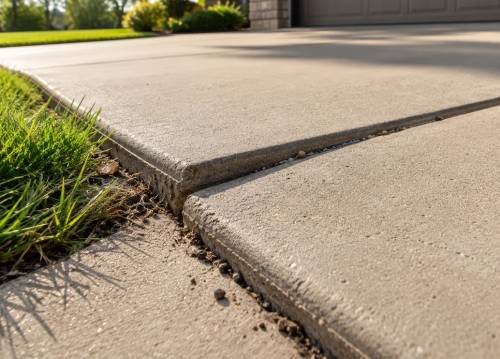
Concrete leveling is used to address concrete slabs that have settled, shifted or become uneven over time. When the concrete remains in suitable condition, leveling may offer an alternative to removing and replacing the entire slab.
Our approach begins with evaluating the affected area, the condition of the concrete and the likely factors contributing to the settlement. This helps determine whether the slab is a suitable candidate for leveling or whether another solution may be more appropriate.
Concrete leveling may be relevant to settled sections of driveways, patios, walkways, sidewalks and other concrete surfaces, depending on the condition of the slab and the services required.
Concrete lifting, also called concrete raising, refers to bringing a settled concrete slab closer to its intended elevation. These terms are often used alongside concrete leveling because lifting the slab can help correct differences in height between adjoining sections.
The appropriate approach depends on the condition of the existing concrete, the amount of settlement, the supporting ground and the requirements of the affected area.
Before recommending a solution, the site should be evaluated to determine whether the slab can be lifted safely and effectively. The goal is to address the uneven surface while considering the underlying conditions that contributed to the problem.
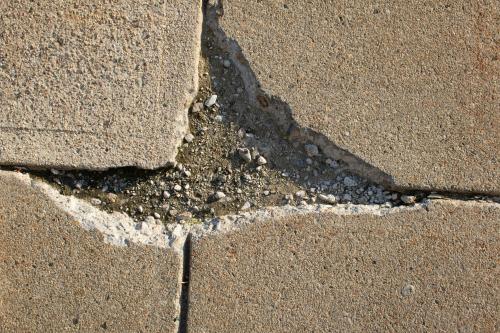
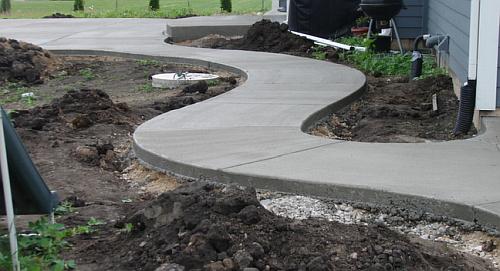
The suitability of concrete leveling depends on the type, condition and location of the slab. Different surfaces have different requirements, so an evaluation is important before deciding how to proceed.
Concrete does not always settle evenly. Changes in the supporting soil, water movement, erosion or inadequate base preparation can contribute to uneven surfaces over time.
Common signs that a concrete slab may need attention include:
These signs do not automatically mean that concrete leveling is the correct solution. Cracking, deterioration and continuing ground movement can affect whether a slab can be lifted successfully. An assessment helps determine the likely cause and whether leveling, replacement or another approach is appropriate.
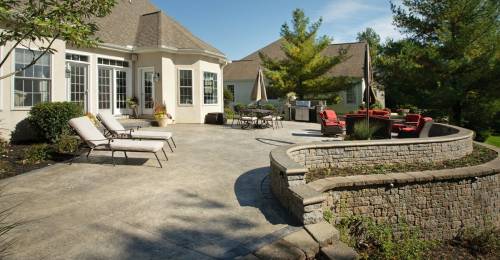
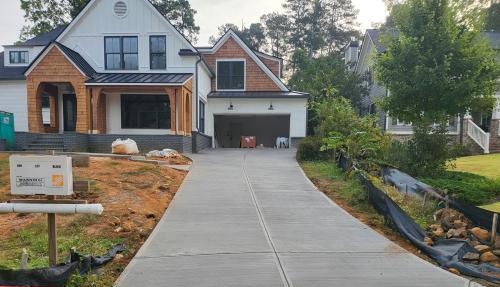
The goal of concrete leveling is to correct the elevation of a suitable settled slab. The specific process depends on the method used and the conditions beneath the concrete.
In general, the work involves evaluating the affected slab, identifying the extent of the settlement and determining whether the existing concrete can be raised to a more appropriate position.
We will also consider the condition of the supporting ground and whether drainage or other site conditions may contribute to future settlement.
The method selected should match the condition of the slab and the requirements of the project. Not every concrete surface can be leveled and some situations require replacement rather than lifting.
The cost of concrete leveling depends on the size of the affected area, the extent of settlement, the condition of the concrete and the method required to complete the work.
Factors that can affect the cost include:
Concrete leveling costs can vary significantly between projects, so a reliable estimate requires an understanding of the specific conditions. Contact us with details about the affected area, the type of concrete and the problem you are experiencing to discuss your project and request an estimate.
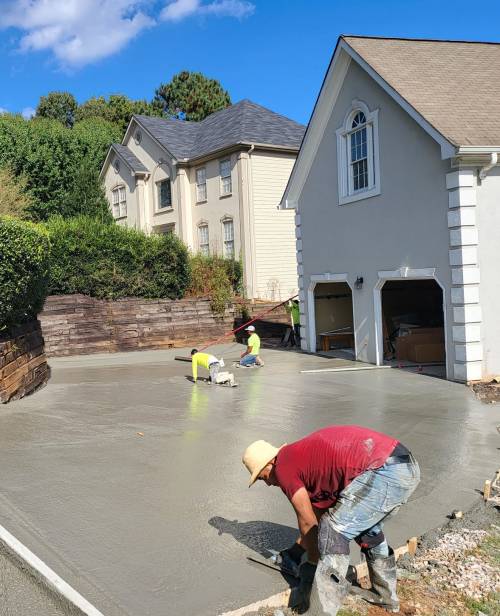
When concrete becomes uneven, leveling is not always the best solution. The right choice depends on the condition of the slab and the reasons it has settled.
The cause of settlement is also important. If drainage problems, erosion or unstable supporting soil remain unresolved, the surface may settle again. An evaluation helps establish whether leveling is a practical option or whether replacement should be considered instead.
Every uneven concrete surface has its own conditions. Evaluating the problem before recommending a solution helps establish a realistic scope of work.
Uneven concrete can affect the safety, usability and drainage of an area. Addressing settlement can help improve the surface where the underlying conditions and slab condition allow an effective solution.
Depending on the project, concrete leveling may help:
The results depend on the condition of the concrete, the cause of the settlement and the method used. Leveling does not guarantee that future settlement will not occur, particularly if the underlying problem continues.
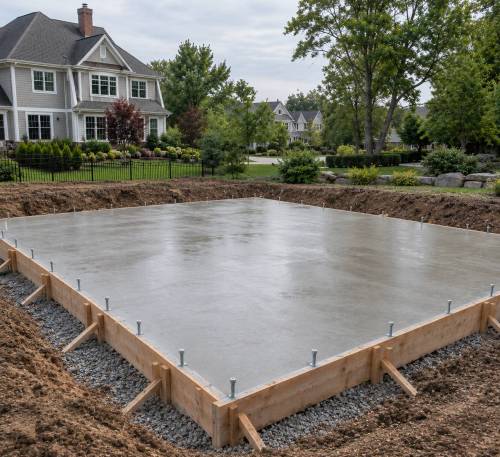
With 22 years of experience and more than 800 completed concrete projects, we understand the importance of evaluating site conditions and choosing an appropriate approach for each project.
We serve homeowners throughout Middlesex and Norfolk Counties, Massachusetts. Our experience with concrete work helps us assess project requirements and discuss practical options based on the condition of the existing surface.
Every concrete problem is different. We focus on understanding the work required and providing an estimate that reflects the actual project rather than assuming that one solution fits every situation.
We provide concrete leveling, lifting and evaluation services across all 13 historic villages of Newton, Middlesex County and Norfolk County.
Read real feedback from residential concrete projects completed across Newton, Middlesex and Norfolk County.
Clear answers to common questions about concrete leveling, slab lifting, raising and costs.
Concrete leveling is the process of correcting the elevation of suitable concrete slabs that have settled or become uneven. Depending on the slab's condition and the method used, leveling may help improve the surface without replacing the entire slab.
The terms are closely related. Concrete lifting generally describes raising a settled slab, while concrete leveling describes correcting the slab's elevation or unevenness. Both terms are commonly used when discussing settled concrete.
Sometimes. The slab's condition, the amount of settlement and the supporting ground all influence whether leveling is appropriate. Severely damaged concrete or ongoing ground problems may require another solution.
Some settled driveway slabs may be suitable for leveling. We need to assess the condition of the concrete, the height differences and the surrounding ground before recommending an approach.
Depending on the condition of the existing slab, concrete leveling may be an option for a settled patio. If the concrete is severely deteriorated or the underlying conditions cannot be addressed adequately, replacement may be more appropriate.
Some uneven sections can be suitable for leveling. Because differences in height can create trip hazards, the condition and elevation of the affected slabs should be assessed to determine the appropriate solution.
The longevity of the results depends on the condition of the slab, the leveling method, the supporting soil, drainage and whether the underlying cause of settlement is addressed. No particular lifespan can be guaranteed without understanding the project conditions.
It can be, depending on the size and condition of the slab, the leveling method and the cost of any additional site work. However, severely damaged concrete may need replacement, so the two options should be evaluated for the specific project.
Concrete leveling primarily addresses elevation and settlement. It does not automatically repair cracks or restore deteriorated concrete. The condition of the slab should be assessed to determine whether leveling is feasible and what other work may be needed.
Possible causes include soil settlement, erosion, changes in moisture, inadequate base preparation, poor drainage and other ground conditions. Identifying the likely cause is important when choosing a solution.
We serve projects throughout Middlesex and Norfolk Counties, Massachusetts. Contact us with your project location and details so we can discuss whether the work is within our service area and capabilities.
Explore our full range of residential and commercial concrete services across Newton and Greater Boston.
Have a sunken driveway, uneven patio or settled concrete walkway? The first step is determining whether the existing concrete is suitable for leveling.
Contact us to discuss the affected area, the condition of the slab and the problems you are experiencing. We can review the project requirements and discuss the next steps toward an appropriate solution in Newton, Middlesex County, Norfolk County or the surrounding service area.